

If you want better results from your email campaigns, you need to follow the right strategies. Many businesses send emails every day, but only a few get high open rates, clicks, and real conversions.
That’s where Email Marketing Best Practices come in. By using proven techniques, you can connect with your audience, build trust, and grow your business faster. Whether you are a beginner or already sending emails, updating your approach can make a big difference.
In this guide, Top 16 Email Marketing Best Practices, you will learn simple and effective tips to improve your email performance, avoid common mistakes, and create emails that people actually want to read and engage with.
Email Marketing Best Practices
16 email marketing best practices to help you succeed. At first, many people feel discouraged by email marketing, as it can seem intimidating. It may even create some concerns about sending emails.
But I’m here to tell you that if you know the basics of email marketing and follow some basic Email Marketing practices, there’s no reason to be anxious or panicked about sending emails.
How to send the best email marketing campaigns?
Keep reading and following these email marketing ideas that’ll improve your ROI and engage your customers, and the digital marketing service may make your campaigns successful.
1. Send welcome emails

A welcome email is one of the most critical communications you can send to your recipients because it often forms the first impression of your brand in your customer’s inbox.
You have to keep it in your mind. To comply with these email marketing best practices, you should do three (3) things for a perfect welcome email:
- Remind the email subscribers why they joined
- Invite engagement through an exclusive offer or another call to action
- Set the tone for the next email communications campaign.
2. Email Personalization
Email personalization is highly effective in distinguishing your messages. The recipient feels as though you are directly addressing them, leading to greater engagement with your correspondence.
Sending personalized newsletters helps improve your exposure rate and click-through rates. These can drive traffic to your website and increase your sales.
3. Have a Call to Action (CTA)

The key to any marketing message is to get feedback. Your email marketing services need a tempting trifle to get input, motivate customers to open it, and keep their interest.
The Call to Action (CTA) prompts users to click. CTAs typically utilize bright colors and thoughtful placement, but yield the best results when employing precise, actionable language to grab attention.
We can use buttons because they are attractive and clean, making them easy to improve conversion. Button-based CTA gets a click-through rate of 28% higher than link-based CTA.
4. Focus on the right metrics.
Focusing on the right metrics is one of the super tactics of email marketing best practices. Let’s take a look at how you should focus on your email marketing efforts.
How to tie specific metrics to your specific goals? It can increase the customer database, generate more leads, and convert more existing leads to customers. Whatever, Whatever, you have to optimize your goals.
The next thing you need to do is figure out which metrics you need to track. To determine how you are progressing toward that goal. That entirely depends upon your goals. You may achieve an Open Rate, Click-through Rate, Conversion Rate, Bounce Rate, List Growth Rate, Email Sharing or Forwarding Rate, Unsubscribe Rate, Etc. By using these email marketing metrics.
5. Use lead magnets
The lead magnet is a free value you propose to your visitors to get their email addresses. Getting their email is a transaction. You want to email them, so give them something in return. To effectively engage in email marketing, you must sell the idea of subscribing to your list, which requires an attractive lead magnet.
The lead magnet can be a great way to offer value. Lead magnets – also known as incentives, free, or “bribes” – are the best way to overcome people’s hesitation. It can be a downloadable eBook, special industry report, calendar, or another tempting giveaway.
6. Test email subject lines
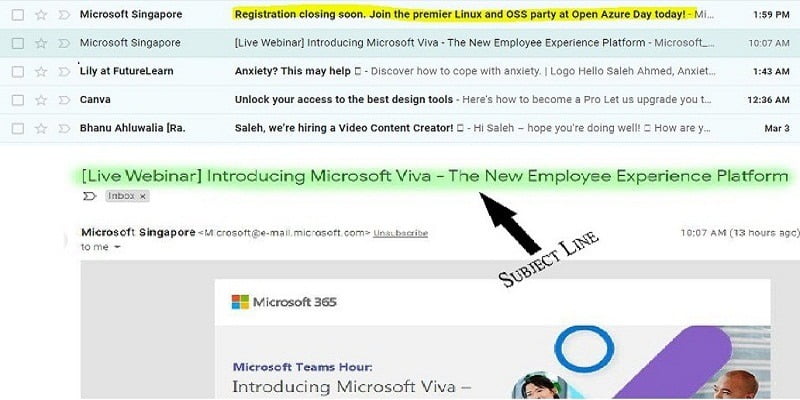
A Business email subject line is the first text line recipients see after your sender’s name when an email reaches their inbox. Most recipients tend to open emails if they contain exciting topics.
Email recipients are likely to delete your email if it lacks informative content or appears spammy. This is similar to how people choose to read or ignore an article or book title. There are three key elements that recipients typically consider before deciding whether to open or disregard your messages: the sender’s name, the subject line, and the pre-header.
It is essential to keep the subject line of an email informative, catchy, and short. You can A/B test your emails on different topics to strike the right chord with your audience.
7. Use a memorable sender name.
Paying consideration to the sender’s name is an email marketing best practice. If your email doesn’t stand out and build trust, your customer probably won’t bother to open it.
If they disregard your newsletters multiple times, future promotions may be sent to the junk folder. Usually, our customers can expect us to know who we are, and using this strategy makes your email less likely to be deleted or marked as spam. 42% of those surveyed said they first look at the sender’s name when deciding to open an email.
Using a company brand name is effective; experienced marketers utilize it because it functions. Your customers will clearly know who you are, making them more likely to open your email.
8. Pull people in with the header.
The email header is crucial for capturing readers’ interest. It serves as the hook that encourages recipients to open your message.
You have to capture their attention and convince them to scroll down. Create an effective email header with these essential elements above the fold to fulfill email marketing best practices.
Including your company name, brand, or the name of the person making the offer, along with your company’s logo, can increase customer confidence and improve recognition among clients.
Include email information in the email header, whether it’s transactional, event-related, or promotional. At this stage, it’s helpful to reassess your approach to ensure it meets your customers’ expectations.
CTAs in this region can build customer interest, encourage them to read the entire message, and ultimately convert those customers.
9. Campaigns at the right time
Many email marketers aim for their newsletters to appear at the top of their subscribers‘ inboxes. The timing of newsletter delivery varies for each subscriber.
Suppose! We check our emails at different times on different devices. Some of us check our inboxes on the phone before getting out of bed. Some of us check our emails on the computer after reaching the office.
We all have daily habits or routines that we tend to follow. When it comes to email marketing, sending emails to multiple recipients at once while considering their different hobbies and interests can be quite challenging. However, if you effectively address these differences, you can significantly grow the results of your email marketing campaign.
10. Make unsubscribing easy

Many email marketers do not use their email footers effectively to achieve the best results. The process of unsubscribing from your email list may not be the most exciting topic, but if you notice that some subscribers are leaving, don’t be discouraged. Other strategies and tips can help you create a more positive impression of your brand among those subscribers.
There is an honest way to keep subscribers even after clicking the “Unsubscribe” link. Try another tactic to help you switch from email to a different channel. So, when your subscriber says goodbye, there is no reason to think forever.
11. Test emails before sending
One of the most important steps in email marketing best practices is to proofread your emails and check them on various devices before clicking the “Send” button or any hyperlinks. Sending yourself a test email before scheduling the final version is a crucial part of this process.
I recommend creating a pre-flight checklist to ensure your email is ready for sending. Start by checking the email to see if it is in good condition. Take some time to preview your email in popular email clients, making sure it doesn’t end up in the junk folder.
Finally, send a test message to yourself before it goes out to your entire list.
Based on my experience and research, I’ve found that one email service provider stands out for delivering excellent results: GetResponse. This platform allows you to run preview tests with just a few clicks, helping you achieve optimal results in a short amount of time.
12. Pay attention to email deliverability.
We will now discuss email deliverability. So, what does email deliverability mean?
Simple Answer, Email delivery is a dimension of how many emails you have delivered to your customers’ inboxes, often expressed as a percentage.
According to SendGrid’s email deliverability statistics, 21% of emails do not reach the recipient’s mailbox.
One common issue with email marketing is failing to follow email deliverability rules. It’s crucial to understand key tips before changing your email service provider or adopting a new email marketing strategy.
To enhance email performance, focus on boosting deliverability, ensuring successful deliveries, and preventing future issues.
Finally, Email deliverability depends on the platform you use to send the email. Various email service providers have different delivery rates.
13. Create automated email campaigns.
Email automation allows you to set up one-off emails every time and send the right messages to the right people at the right time.
A compelling example of automated email marketing promotions is your welcome email. Another email automation example is a quick reminder that the customer placed something in their cart but never checked out. It helps customers learn more about your brand, encourages them to come back, or reminds them why they bought from you in the first place.
As a business owner or marketer, you need to stay connected with your customers. Apply email marketing best practices.
Email automation is a powerful marketing tool that lets you send the right message to the right people at the right time. Its automated workflows are effective for nurturing leads and driving sales from both potential and existing customers.
14. Use confirmed opt-in
Using confirmed opt-ins is one of the best email marketing practices. Let’s talk about it. Setting up a signup form on your Facebook page or Landing page is the best way to develop your email data.
Anyhow! Once they have signed up, they should send an email to confirm their email address. Since users verify their email addresses cause they want to sign up. Of course, this action makes it more responsive and leads to higher email engagement. Also, the double opt-in email marketing is known as confirmed opt-in.
When a user subscribes to your list and then needs to confirm their email, for example, when a website visitor subscribes to your newsletter, they receive an email with a confirmation link. They must click to verify their email address.
A double opt-in email is only for contacts who confirm their subscription and add to your email list.
15. Segment your email list.
Almost all marketers know that segmenting email marketing lists improves open and click-through rates.
Email segmentation involves organizing your email list by specific criteria, allowing you to create targeted groups. This strategy enables you to send more personalized and relevant content or offers to customers based on factors such as geographic location, purchase history, and shared interests.
Additionally, it results in higher open rates, click-through rates, conversion rates, and increased revenue.
For example, if you offer your customers something ordinary, they won’t perceive it as valuable as their own information.
That is why “segmentation” is so important! Whether you are marketing B2C or B2B is equally important.
16. Use targeted Pop-Ups

When using targeted pop-ups, you need to understand where your audience is coming from; some visitors have discovered you for the first time in Google search results. Some visitors may have visited your site before and are still thinking whether to purchase from you.
Here are a few more visitors who may have heard about your store through social media promotions, a news article, or other media presence.
We know that every person in the world has different goals, so each visitor may have slightly different goals in their mind, as is usually the case with first-time visitors who came to your page by searching.
Returning visitors will compare your offer with your competitors’, examine your offer, price, product quality, etc., and decide to buy. Social media viewers have often been curious. Experience shows that genuine buyers and visitors come to purchase the product after seeing the advertisements.
Finally, simultaneously, a single Pop-Up can target all possible needs. But knowing these requirements can help your Pop-Ups better target and increase conversions. First, identify your target audience segment, then launch a pop-up specifically tailored to each group.
Conclusion
Email marketing is not just about sending messages—it’s about building relationships and delivering value. By following these Email Marketing Best Practices, you can improve your open rates, increase engagement, and grow your business effectively.
Start with small changes, test different strategies, and keep improving over time. Remember, success in email marketing comes from consistency and understanding your audience. If you apply the tips shared in this guide, you will be on the right path to creating successful email campaigns.
FAQ Section
Q1: What is Email Marketing Best Practice?
Email marketing best practices are proven strategies that help improve email performance, engagement, and conversions.
Q2: How often should I send emails?
It depends on your audience, but once a week or twice a month is a good starting point.
Q3: What is a good email open rate?
A good open rate usually ranges between 15% to 25%, depending on your industry.
Q4: Why are my emails going to spam?
This can happen due to spammy words, poor email list quality, or a lack of authentication.
Q5: Is email marketing still effective in 2026?
Yes, email marketing is still one of the most effective digital marketing strategies when done correctly.