
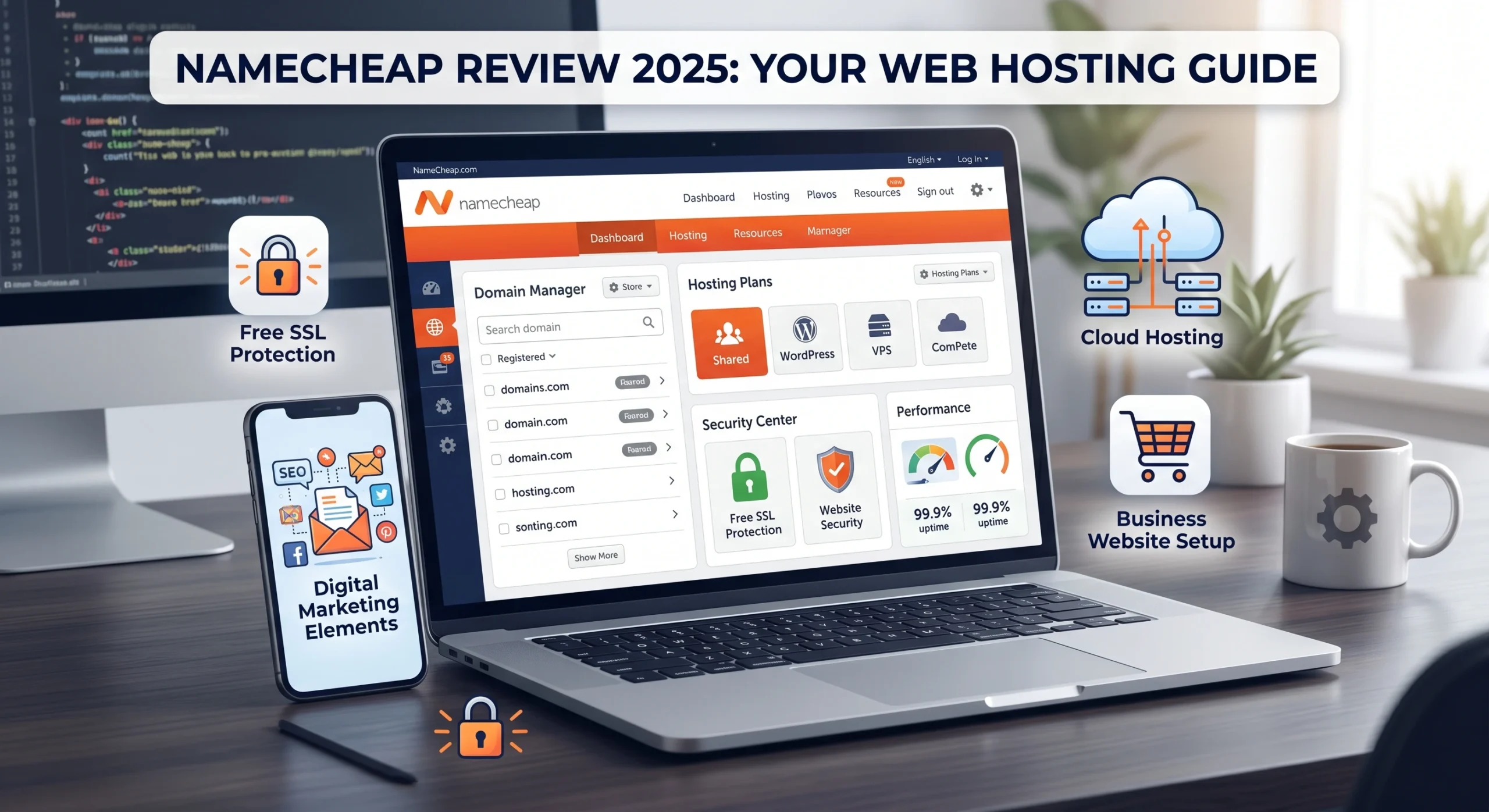
If you’re launching a website—whether it’s for your small business, a startup, or personal use—you’ll need reliable services for domain registration, hosting, and security. Namecheap is a popular option in this field.
In this Namecheap Review, I will explore what makes Namecheap unique and where it may have limitations. I will focus on the features that matter most to you.
Namecheap Review 2025:
Discover the comprehensive Namecheap review for 2025, highlighting its user-friendly interface, competitive pricing, and robust features that help beginners and experienced webmasters manage domains effortlessly.
Namecheap has proven to be an excellent choice for domain registration and web hosting services. Their easy-to-use interface makes buying and managing domains simple. Their competitive prices appeal to both beginners and experienced webmasters. The customer support team is responsive and knowledgeable, often resolving issues promptly, which enhances the overall customer experience.
Additionally, Namecheap offers useful features such as free WHOIS privacy protection and reliable uptime, ensuring that your website remains accessible. Overall, Namecheap stands out for its transparency, affordability, and commitment to customer satisfaction, making it a reliable partner for anyone looking to establish their online presence.
What Is Namecheap?
Namecheap is a domain registrar and web services company founded in 2000. It offers domain registration and transfers, various hosting options, email solutions, SSL certificates/security tools, website builders, and more.
They promote themselves with the slogan “Make more online, for less,” emphasizing affordability alongside a strong feature set.
Key Features and Benefits
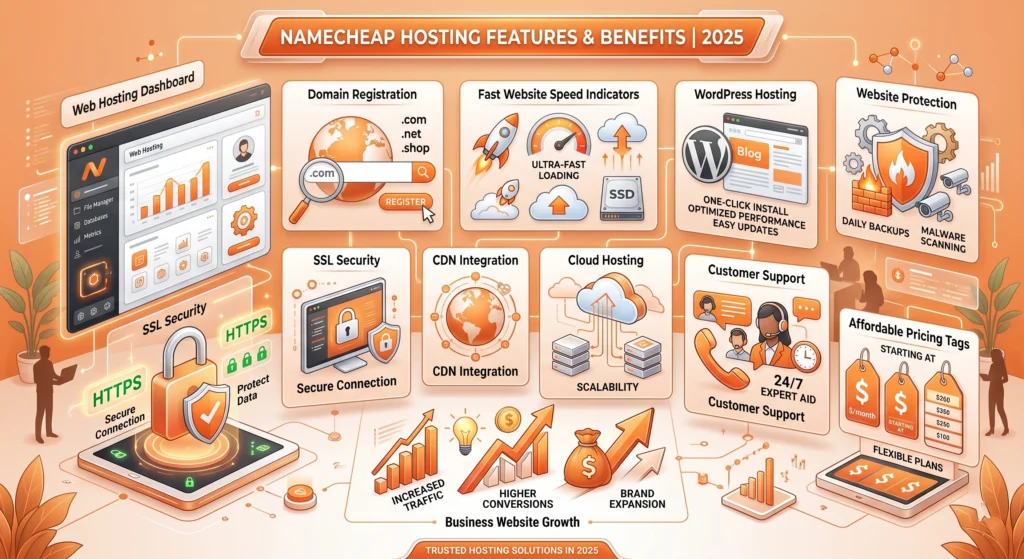
Here are the features that make Namecheap particularly appealing to your audience:
| Feature | What It Offers | Why It Matters for Your Use Case |
| Domain Registration & TLD Variety | Hundreds of TLDs (.com, .net, .org, .biz, .store, many “new TLDs”), along with domain search tools like Beast Mode, bulk domain registration, and domain transfers. (Namecheap) | Budget matters a lot for startups, small businesses & personal sites. If you can get good performance + security + support without breaking the bank, that’s a win. |
| Hosting Options | For personal sites or small businesses, you likely don’t need a dedicated server right away: shared or WordPress hosting is cheaper & simpler. These starter features (free domain, SSL, email) lower your upfront costs and technical barriers. | Security matters badly: customers need to trust your website. Domain privacy protects your personal info. Even for small sites, small costs for SSL, etc., are worth it to avoid big headaches (HTTPS, trust, SEO). |
| Security & Privacy Features | Domain privacy, SSL certificates, 2-Factor Authentication (2FA), PremiumDNS, VPN, and security tools. | Domain privacy, SSL certificates, 2-Factor Authentication (2FA), PremiumDNS, VPN, and security tools. |
| Customer Support & Usability | Budget matters a lot for startups, small businesses, and personal sites. If you can get good performance, security, and support without breaking the bank, that’s a win. | Competitive pricing promos (domains, shared hosting, etc.), free trials, add-ons included (SSL, domain-based email in some plans), all backed by name recognition. |
| Value for Money | Competitive pricing promos (domains, shared hosting, etc.), free trials, add-ons included (SSL, domain-based email in some plans), all backed by name recognition. | Budget matters a lot for startups, small business & personal sites. If you can get good performance + security + support without breaking the bank, that’s a win. |
What Could Be Better
No service is perfect. Here are some of the drawbacks or trade-offs:
- Renewal prices can be higher. A domain or hosting plan might have a low “first-year” cost but renew at a higher rate. Always check renewals.
- Shared hosting performance is decent, but if your traffic spikes, you may need to upgrade (to VPS or managed WP), which increases cost.
- Some advanced features (high-security, speed optimizations, large-scale infrastructure) are better in more premium or specialized providers. If you are building something very large or complex, you might outgrow Namecheap.
Who It’s Best For
Namecheap is especially well-suited for:
- Small business owners who want to get online quickly, with minimal fuss, with decent performance, and strong security.
- Individuals and bloggers who want a domain + hosting + free SSL bundled, easy tools & good support.
- Web developers/freelancers who want a registrar + hosting provider that gives decent control, variety, and bang for the buck.
- Startups in the early stages test their ideas by creating a minimum viable product (MVP), building a marketing website, and setting up a documentation site.
Not suitable for those requiring enterprise-level performance, global low latency, or highly specialized server setups—though Namecheap can complement a larger system.
Comparison Snapshot
| Much higher cost; simpler/cheaper plans are less feature-rich. | Strength vs Namecheap | Weakness vs Namecheap |
| GoDaddy | Global reach, some more “all-in-one” marketing tools | Often more expensive, upsells; UI/fees less straightforward. |
| Bluehost / HostGator | Well-known shared hosting, beginner doc support | Sometimes there is less variety in domain choices, and potentially less flexibility. |
| SiteGround / WP Engine | High performance, excellent speed & cache/CDN options | Much higher cost; simpler/cheaper plans less feature-rich. |
Pricing & Plans (Typical Cases)
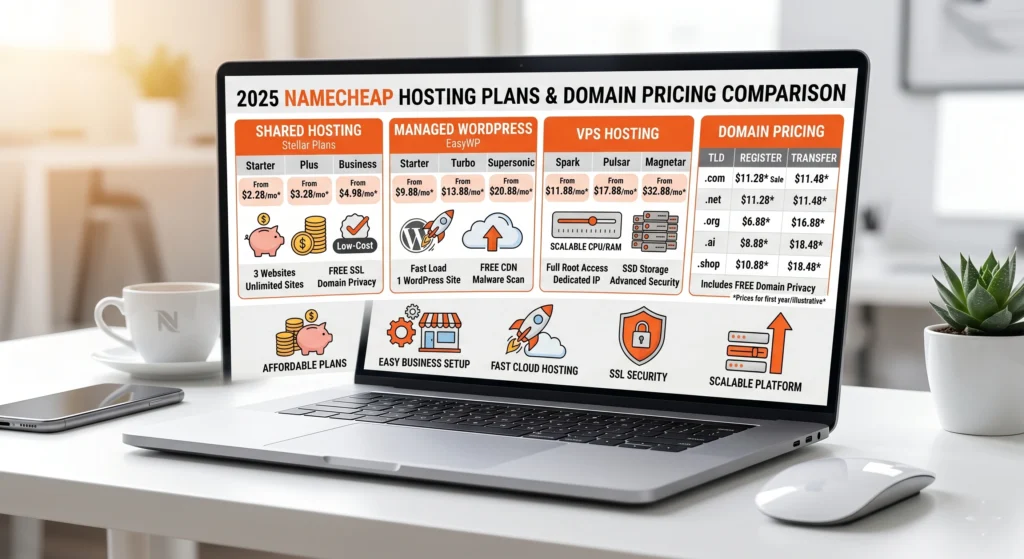
Here are typical cost points, so you know what to expect:
- Domain names: promotions often allow “.com” or other popular TLDs at ~$6–10 for the first year. New / specialty TLDs more.
- Shared hosting (Stellar, etc.): low monthly rates for basic plans with free domain (or sometimes trial) + SSL + email accounts.
- Managed WordPress (EasyWP): higher but value for WP-specific features, optimized performance, etc.
- Add-ons: privacy, premium DNS, SSL, VPN, etc., cost extra but are relatively affordable compared to standalone security providers.
Verdict
Overall, Namecheap is an excellent choice for small businesses, startups, web developers, and individuals who want reliable, affordable, easy-to-use domain & hosting services with good security. If you budget carefully, check renewal fees, and choose a hosting plan appropriate for your expected traffic, you’ll get a lot of value.
If I had to sum up in one line, Namecheap gives you the tools to build a professional website affordably without sacrificing too much in performance or security.
Tips to Get the Most Out of Namecheap
- Always note renewal costs when you buy a domain or hosting; sometimes, first-year discounts are tempting, but second-year and beyond may cost more.
- Use domain privacy (if offered) to protect your personal details.
- For WordPress sites, start with a managed WP plan if you can budget; the ease/speed/built-in tools often pay off.
- Monitor usage: as your site grows, be ready to upgrade (hosting type, storage, etc.) to maintain good performance.
- Leverage the support/knowledge base (“Guru Guides”) to learn best practices (security, performance, backups).
Pro Tips
Before making a purchase, it’s crucial to do your homework! I highly recommend diving into some Bluehost reviews to ensure you make an informed decision. It’s all about finding the right fit for your needs!
Conclusion
In conclusion, Namecheap emerges as a solid choice for those seeking reliable web hosting and domain registration services. With its user-friendly interface, competitive pricing, and excellent customer support, it caters well to both beginners and seasoned developers alike.
The additional features, such as free SSL certificates and a variety of hosting plans, further enhance its appeal. Overall, Namecheap provides a comprehensive solution for anyone looking to establish a strong online presence.